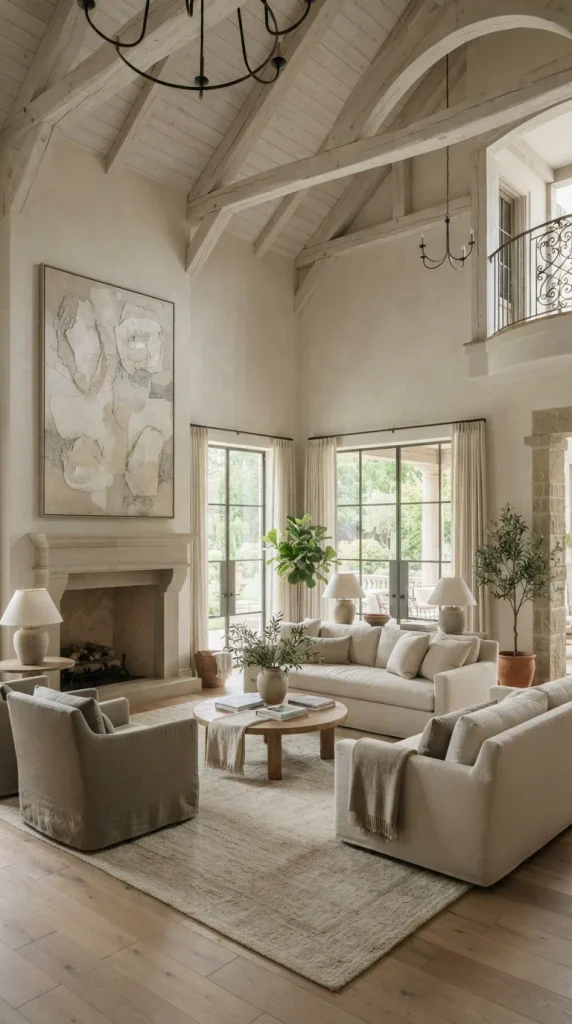
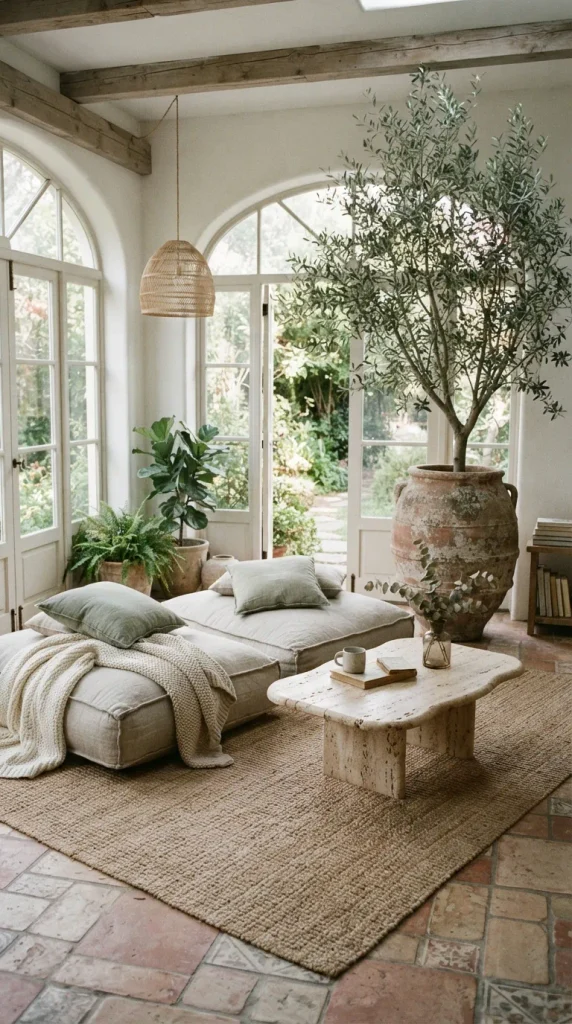
The Concept Often called the “fifth wall,” the ceiling is frequently neglected in interior design. Adding faux or structural wooden beams treated with a white-washed or limed finish draws the eye upward, adds rustic architectural character, and warms up high-ceilinged spaces.
How to Make It
- Beam Sourcing: Source lightweight hollow box beams made from reclaimed pine or lightweight polyurethane foam finished to look like aged timber.
- Finishing: Apply a diluted whitewash stain using white acrylic paint mixed with water, wiping it back with a rag to let the natural wood grain peek through.
- Installation: Secure structural mounting cleats into ceiling joists and slide the box beams securely into place.
Variations & Customization
- Planked Ceiling: Combine beams with tongue-and-groove white oak ceiling planks painted in ultra-matte chalk white.
- Dark Contrast: Use charred Shou Sugi Ban wood beams against soft cream plaster for a dramatic, high-contrast neutral palette.
Pro Tips Ensure your ceiling beams run parallel to the longest wall in the room to visually expand the perception of space.
8. Oversized Abstract Neutral Textured Canvas Art
The Concept Mass-produced commercial art can lack soul. Creating your own oversized abstract canvas using heavy molding paste and a monochromatic palette results in a bespoke gallery-worthy statement piece that adds tactile dimension to expansive empty walls.
How to Make It
- Stretcher Bars: Build a custom wooden canvas frame and stretch raw unprimed heavy cotton duck canvas tightly across it.
- Texturizing: Mix acrylic gesso with heavy modeling paste and marble dust. Apply it thickly using drywall knives, putty knives, and notched trowels to create ridges, swirls, and architectural lines.
- Monochrome Glazing: Once dry, wash over the texture with subtle washes of warm ivory, raw umber, and soft ecru acrylic paint.
Variations & Customization
- Linear Minimalism: Use a plastic scraper to drag clean, minimalist horizontal or vertical grooves through wet plaster for a Japanese Wabi-Sabi aesthetic.
- Float Framing: Surround the finished canvas with a custom natural oak floating frame to give it a polished, architectural finish.
Pro Tips Hang the art without glass so that natural side-lighting can cast dramatic shadows across the raised plaster textures throughout the day.
9. Sculptural Plaster Archway Room Dividers
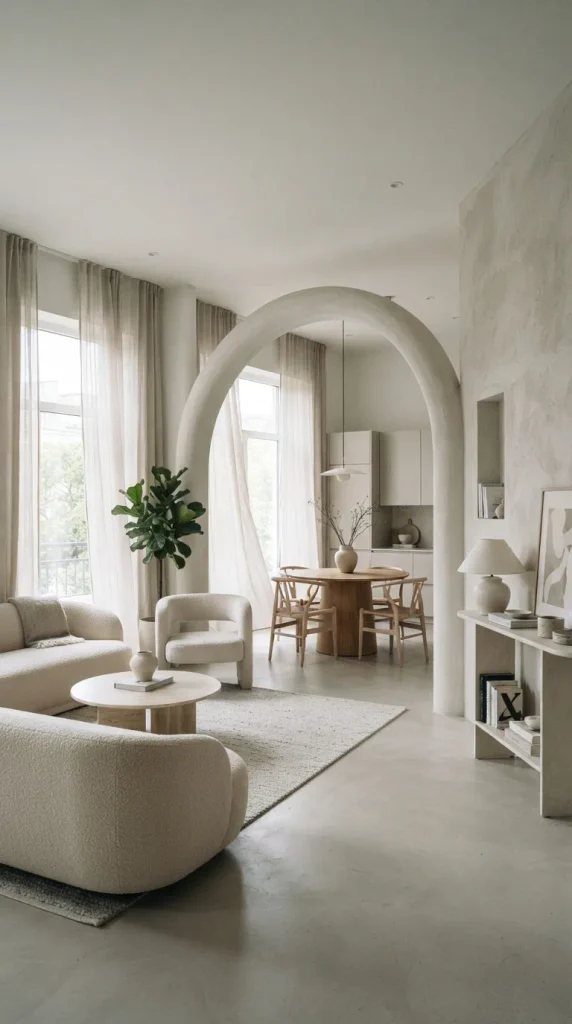
The Concept Open-concept floor plans can sometimes feel cavernous and lack definition. Replacing standard rectangular doorways with soft, sweeping arches finished in seamless white plaster creates a fluid transition between spaces while maintaining an airy, uninterrupted sightline.
How to Make It
- Framing: Build the curved arch header using flexible MDF or kerf-cut drywall attached to reinforced wood framing studs.
- Joint Compound: Apply multiple layers of mesh tape and joint compound, sanding meticulously between coats to achieve a flawless curve.
- Plaster Coat: Finish with a thin layer of decorative lime plaster or Venetian plaster to give it an old-world, hand-carved stone appearance.
Variations & Customization
- Fluted Archway: Wrap the interior jamb of the arch in half-round wood fluting painted the exact same shade of warm plaster for added textural rhythm.
- Asymmetrical Arch: Design a gentle, sloping asymmetric archway for a modern, avant-garde architectural statement.
Pro Tips Leave the opening doorless to maximize light flow between rooms while enjoying the sculptural frame from both sides.
10. Artisanal Hand-Woven Jute and Wool Area Rug
The Concept Neutral flooring needs textural variance to feel rich rather than stark. Combining rough, earthy natural jute with plush, undyed New Zealand wool in a flat-weave or looped pile creates a sensory foundation that feels incredible underfoot and anchors organic furniture layouts.
How to Make It
- Material Selection: Source undyed wool yarns spun straight from sheep fleeces and thick, golden-tan natural jute fibers.
- Weaving: Work on a large floor loom using a Soumak or flat-weave technique, alternating thick bands of nubby wool with tight braids of jute.
- Backing: Add a breathable cotton canvas backing with organic non-slip corner tabs to keep the rug stable on hardwood floors.
READ MORE: 20 Green Nature Decor Ideas
Variations & Customization
- High-Low Pile: Carve geometric tribal or minimalist grid patterns into the rug by contrasting high-pile tufted wool against low-pile jute fields.
- Oatmeal Herringbone: Weave the wool and jute in a classic herringbone pattern for subtle, tailored sophistication.
Pro Tips Layer this large neutral rug under a smaller vintage Oushak or faded antique rug in muted beige tones to create an effortless, collected-over-time look.
11. Hand-Crafted Terracotta and Ramekin Vessel Clusters
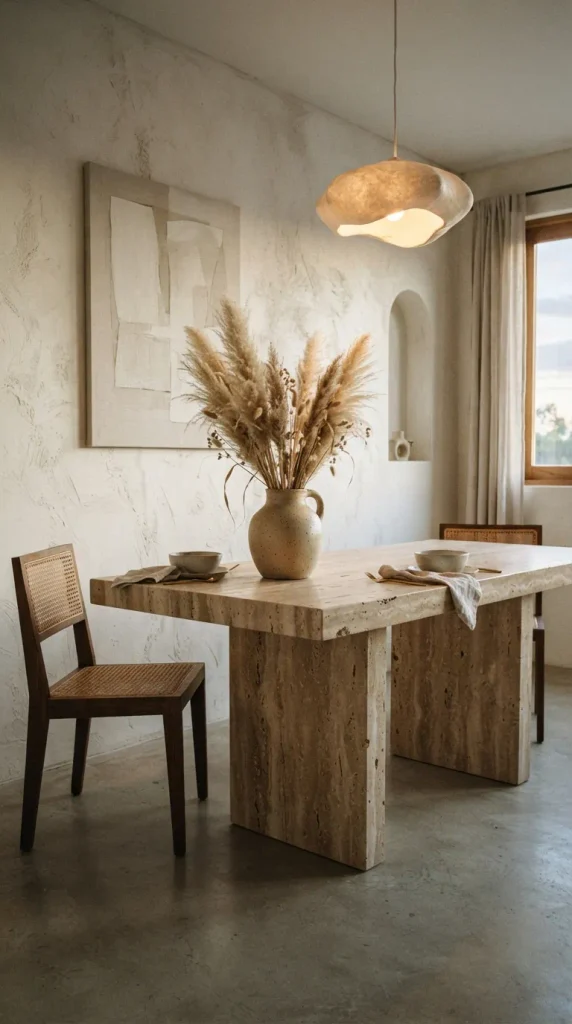
The Concept Instead of cluttering surfaces with lots of small trinkets, group artisanal terracotta and unglazed earthenware vessels in odd numbers. Their varied heights, organic imperfections, and warm earthy tones bring instant grounding to sideboards, consoles, and mantels.
How to Make It
- Sourcing Clay: Collect raw terra cotta clay or purchase unglazed flower pots and simple craft store vases.
- Custom Treatment: Apply baking soda mixed with flat acrylic paint in bone white or taupe directly onto the pots, dabbing with a sponge to create a convincing aged, antique pottery texture.
- Styling: Display them in clusters of three or five, leaving some empty and filling others with dried pampas grass, olive branches, or bunny tails.
Variations & Customization
- Kintsugi Accent: Intentionally crack an old clay vessel and repair the seams using gold epoxy resin to highlight wabi-sabi principles.
- White Wash Dipping: Dip the bottom half of each terracotta pot into a bucket of matte white milk paint for a two-tone dipped effect.
Pro Tips Vary the scale drastically. Pair one very tall, slender vessel with two short, wide bowls to create dynamic visual weight.
12. Integrated Architectural Limestone Fireplace Surround
The Concept The fireplace is the natural focal point of a living room. Stripping away ornate traditional mantels and replacing them with a monolithic, clean-lined surround carved from French limestone or cast stone creates a striking focal point rooted in quiet luxury.
How to Make It
- Template Design: Measure your firebox opening and draft a simple, geometric surround consisting of two vertical jambs and a thick horizontal lintel slab.
- Stone Fabrication: Have a local stone mason cut honed, unfilled beige limestone slabs with precise mitered 45-degree corner joints.
- Installation: Secure the stone pieces to the brick firebox using heavy-duty structural stone epoxy and concealed mechanical anchors.
Variations & Customization
- Micro-Cement Overhaul: If replacing the stone is outside your budget, skim coat your existing red brick fireplace directly with heat-resistant micro-cement for an instant modern upgrade.
- Recessed Hearth Box: Build a flush limestone hearth that sits level with your hardwood flooring for a seamless, trip-free transition.
Pro Tips Keep the mantel completely bare except for a single large, leaning piece of neutral abstract art to maintain modern minimalist elegance.
13. Raw Edge Solid White Oak Floating Coffee Table
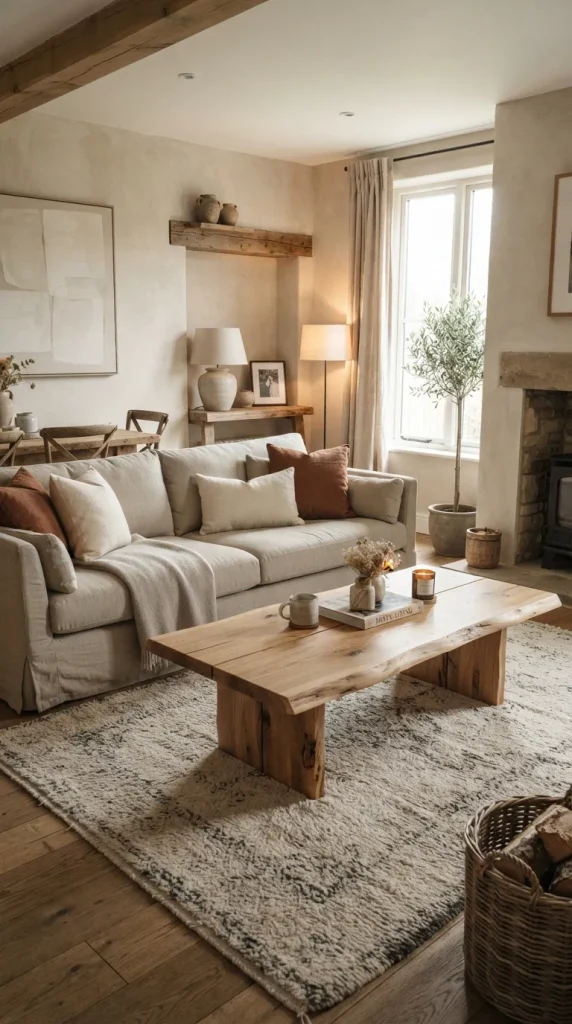
The Concept Mass-produced furniture often features overly processed, uniform lumber. A custom coffee table crafted from a single slab of character-grade white oak with its natural live edge intact brings organic warmth, knots, and grain patterns into the center of the room.
How to Make It
- Slab Selection: Acquire a kiln-dried white oak tree slab featuring natural live edges and visible growth rings.
- Planing & Sanding: Flatten the slab using a router sled, then sand progressively from 80 grit to 220 grit until silky smooth.
- Finishing: Apply a dead-flat, water-based natural hard-wax oil that seals the wood without altering its raw, freshly-cut blonde appearance or adding an artificial amber sheen.
- Base Integration: Mount matte black powder-coated steel hairpin legs or chunky geometric wooden block legs underneath.
Variations & Customization
- Bleached Oak Wash: Apply a light lye or white-tinted oil wash to further tone down yellow golden undertones for a Scandinavian white-washed finish.
- Waterfall Edge: Miter the ends of the slab so the wood grain cascades down to the floor on both sides for a sleek waterfall silhouette.
Pro Tips Condition your white oak furniture twice a year with natural beeswax to maintain its moisture balance and rich matte luster.
14. Oversized Linen Slipcovered Lounge Sofa
The Concept The ultimate neutral living room anchor is a deep, sink-in sofa upholstered in casual, removable Belgian linen slipcovers. It offers relaxed comfort that feels welcoming rather than formal, encouraging long conversations and lazy Sunday afternoons.
How: To Make It
- Frame & Fill: Choose a kiln-dried hardwood frame stuffed with down-blend cushions wrapped around high-resilience foam cores for maximum cloud-like sinkability.
- Slipcover Construction: Tailor a loose-fitting slipcover out of pre-washed stonewashed heavy linen with relaxed waterfall skirts that gently pool onto the floor.
- Maintenance: Ensure the entire cover is machine washable or easily dry-cleanable for effortless upkeep.
Variations & Customization
- French Seam Detailing: Add exposed raw-edge French seams along the sofa arms and cushion borders for an artisanal, bespoke finish.
- Modular Configuration: Opt for an L-shaped sectional layout configured in modular blocks covered in matching oatmeal linen.
Pro Tips Toss a mixture of oversized feather-filled lumbar pillows in contrasting neutral textures like boucle, raw silk, and houndstooth linen against the back cushions.
15. Reeded Wood Tambour Accent Wall Panels