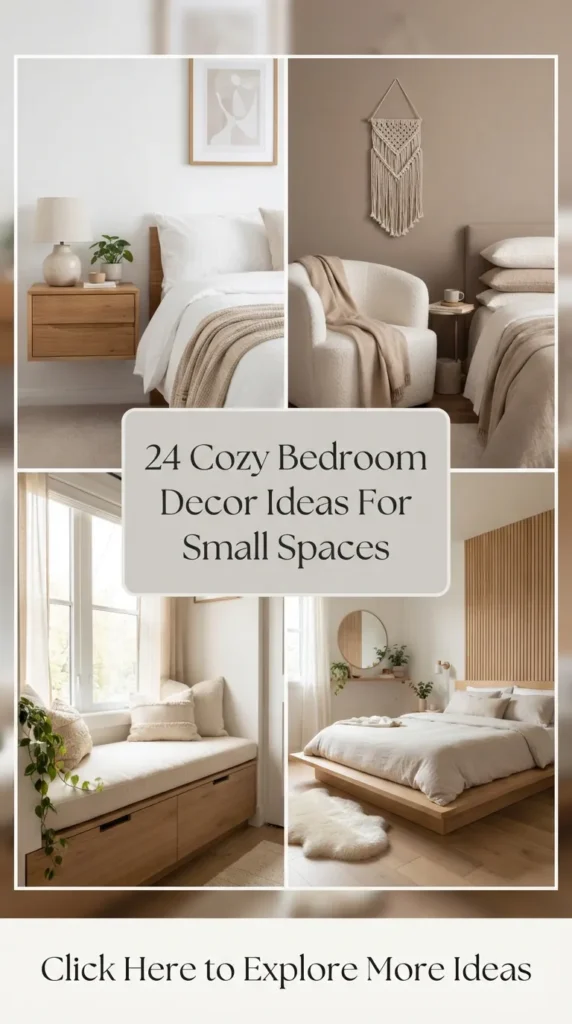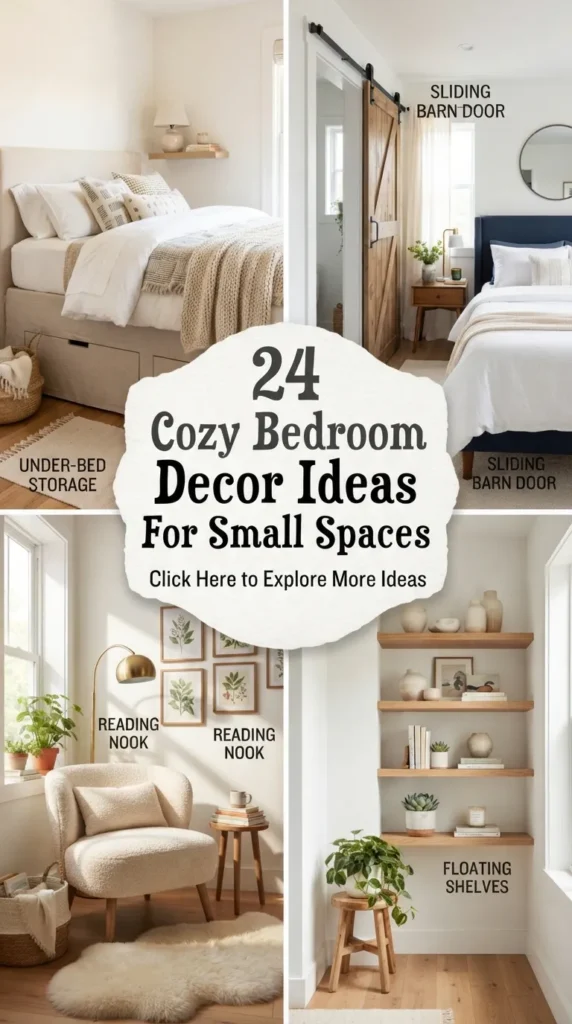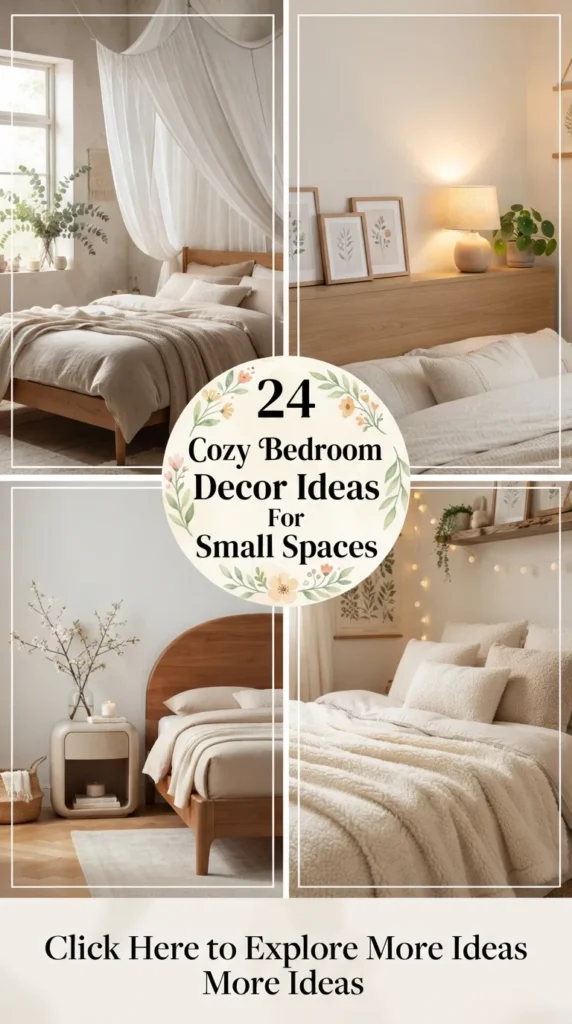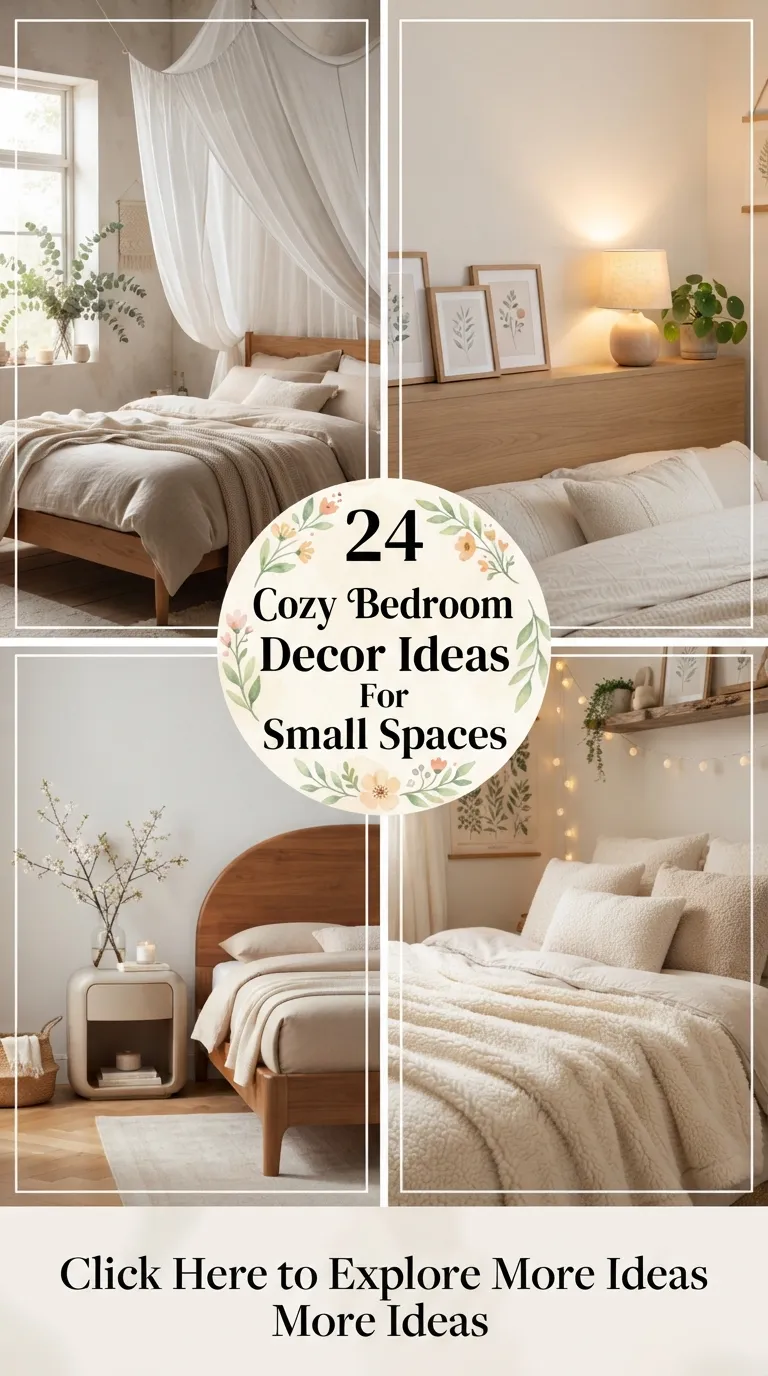
Living in a small space often feels like a puzzle where every piece of furniture has to fight for its right to exist. But having a small bedroom doesn’t mean sacrificing comfort, beauty, or style. In fact, compact bedrooms are uniquely suited for cozy, intimate aesthetic design. When done right, a modest room can easily feel like a high-end boutique hotel or a serene retreat hidden away from the world.
The secret lies in intentional choices: maximizing vertical height, playing with soft textures, keeping clutter contained, and utilizing lighting to create warmth. Below are 20 realistic, cozy bedroom decor ideas designed specifically for small spaces to help you transform your room into a cozy haven.
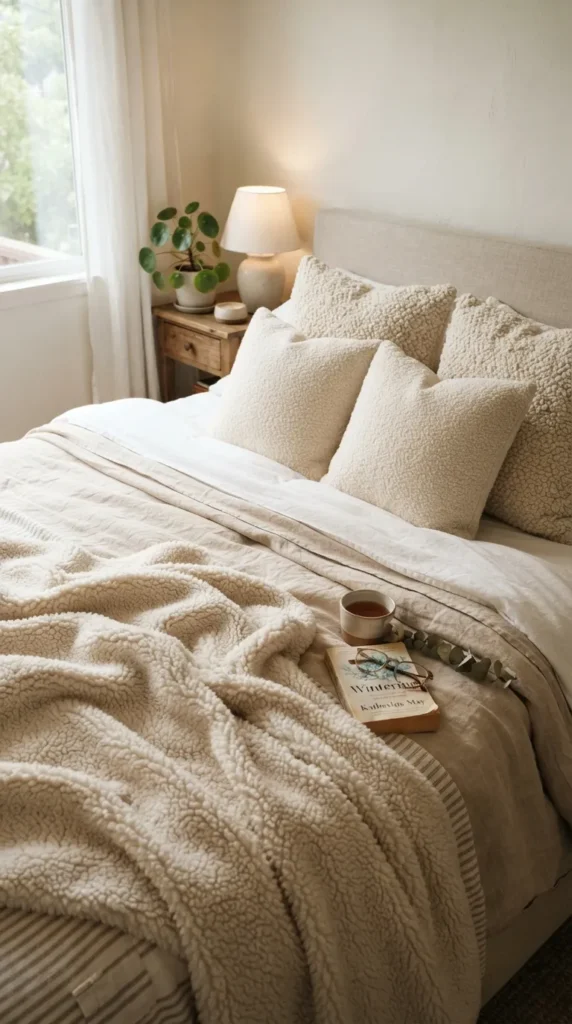
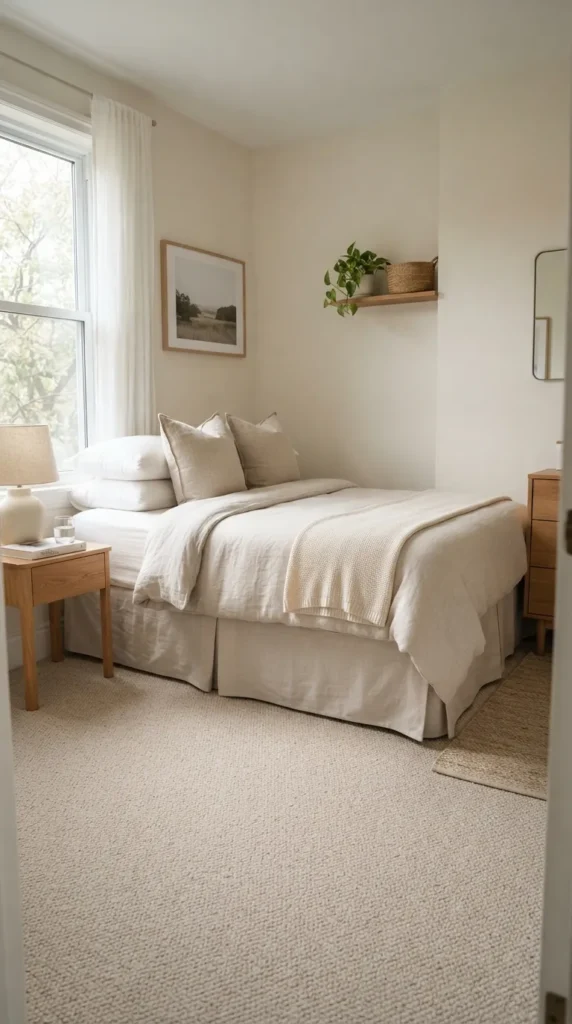
Idea 1: The Layered Linen Haven
What This Idea Means
This design concept relies heavily on tactile texture rather than rich ornamentation. By mixing breathable, crinkled linens in varying shades of oat, cream, and warm gray, you build physical and visual warmth without visually cluttering a small room.
How to Make It
- Start with a neutral base: Choose a crisp white or warm off-white linen fitted sheet.
- Layer tone-on-tone blankets: Add a duvet in a natural flax color, followed by a waffle-knit or cable-knit throw folded neatly across the bottom third of the bed.
- Stack your pillows: Combine two standard sleeping pillows in plain pillowcases with two textured linen shams. Finish with a single lumbar pillow in a muted earthy tone.
Tips and Variations
- Tip: Avoid bright, high-contrast patterns; keep everything within the same color family to maintain an open feel.
- Variation: Swap out lighter linens for rich velvet or wool throws during winter to adjust the temperature and ambiance seamlessly.
Idea 2: Floating Nightstands with Integrated Sconces
What This Idea Means
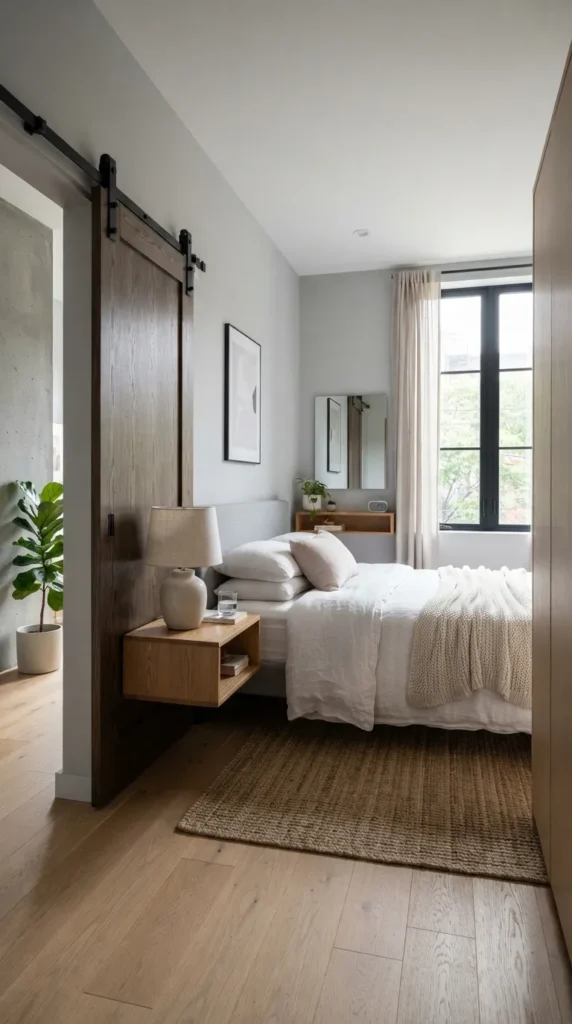
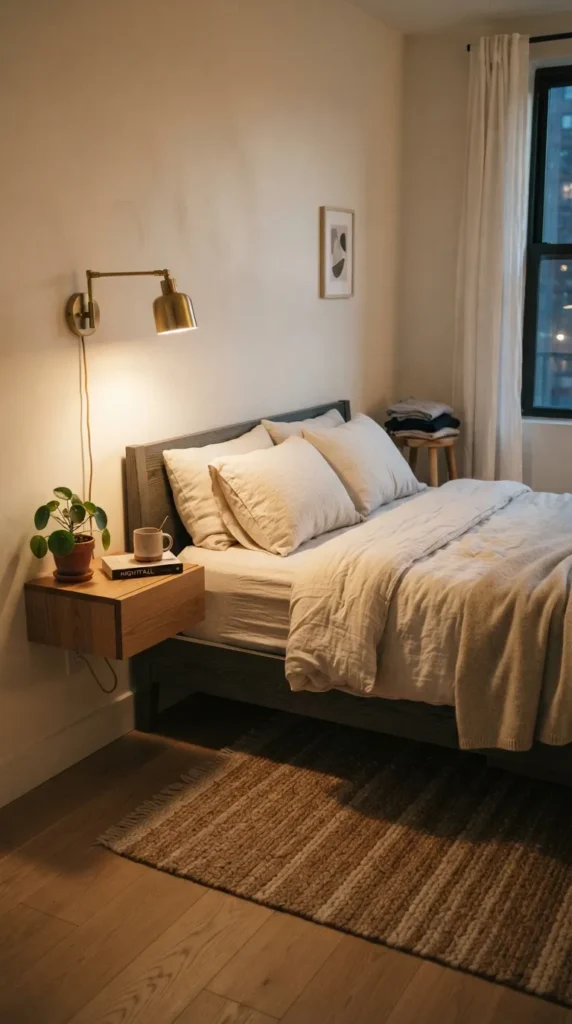
Floor space is precious in a compact bedroom. Floating furniture opens up visible floor area, making the room look larger, while wall-mounted sconces eliminate the need for bulky tabletop lamps.
How to Make It
- Mount a floating shelf or drawer: Place it at mattress height on one or both sides of the bed.
- Install wall sconces: Mount plug-in or hardwired swing-arm sconces about 18 to 24 inches above the top of the mattress.
- Keep the top minimalist: Keep only a glass of water, a book, and a small plant or ceramic vessel on top.
Tips and Variations
- Tip: Use floating drawers with hidden compartments to tuck away charging cables and personal items out of sight.
- Variation: If mounting into walls isn’t an option, use a sleek, single-pedestal slender end table with an adjustable floor lamp tucked right beside it.
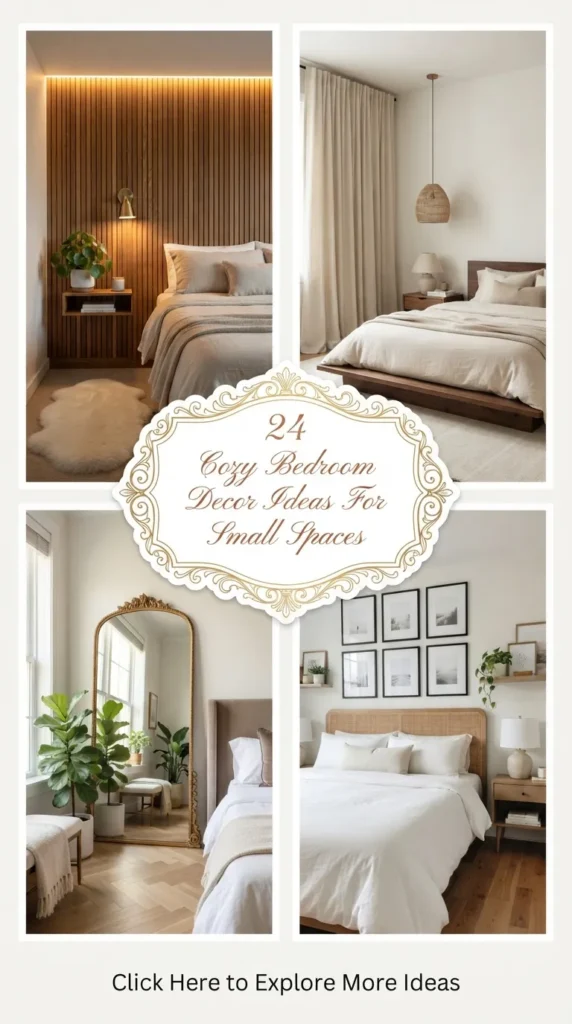
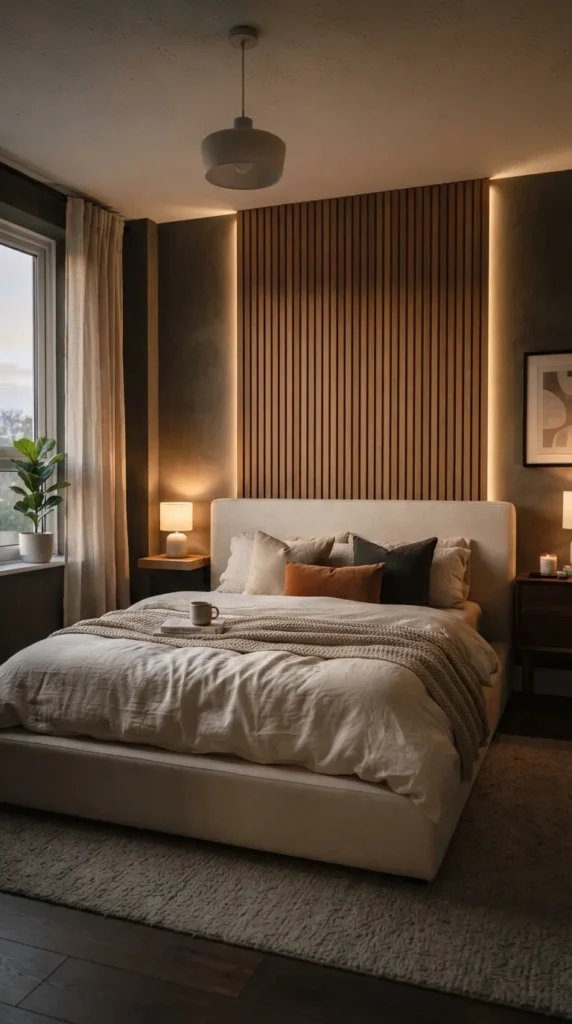
Idea 3: Warm Wood Slatted Accent Wall
What This Idea Means
Instead of painting a small room a dark accent color that might make it feel enclosed, a slatted wooden wall adds organic texture, depth, and vertical lines that draw the eye upward, making ceilings appear taller.
How to Make It
- Source thin wooden slats: Pine, oak, or walnut slats work beautifully.
- Prep the wall: Paint the wall behind the slats a deep charcoal or warm off-white depending on the desired contrast.
- Attach the slats: Secure the wood strips vertically across the wall behind the bed using finish nails or construction adhesive, spacing them evenly.
Tips and Variations
- Tip: Apply a clear matte polyurethane coat to protect the wood while preserving its natural color.
- Variation: Instead of covering the entire wall, build a custom floor-to-ceiling slatted headboard that spans just the width of your bed.
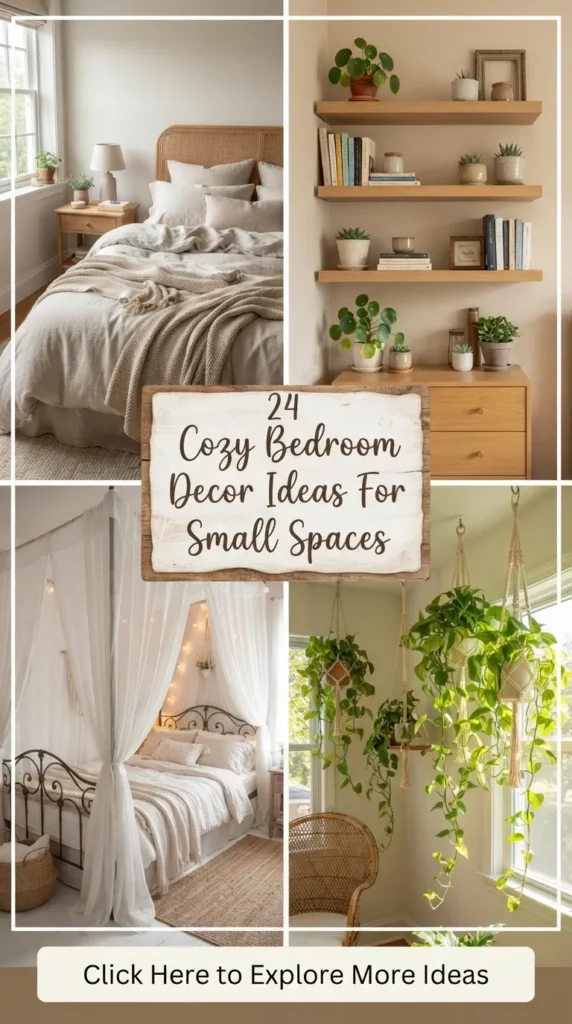
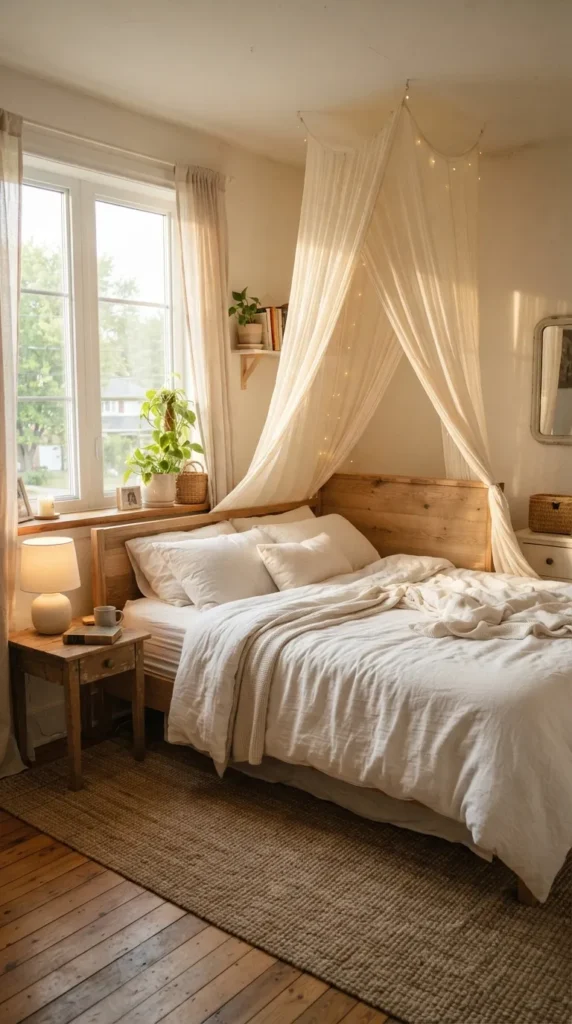
Idea 4: Overhead Canopy Sheers
What This Idea Means
Canopies often feel grand and space-consuming, but using lightweight, semi-translucent sheer fabrics creates a sense of romantic enclosure without blocking light or making the room feel tight.
How to Make It
- Install ceiling hardware: Screw subtle curtain tracks or brass hooks into the ceiling directly above the head of the bed.
- Drape light fabric: Hang lightweight cotton gauze or sheer linen panels that cascade gently down both sides of the pillow area.
- Keep it loose: Let the fabric gather slightly on the floor for a relaxed, airy appearance.
Tips and Variations
- Tip: Opt for off-white or soft cream fabrics over bright stark whites for a gentler glow under artificial light.
- Variation: Hang a single hoop-style sheer canopy centered directly above the middle of the bed for a classic, subtle canopy effect.
Idea 5: Under-Bed Storage with Tailored Bed Skirts
What This Idea Means
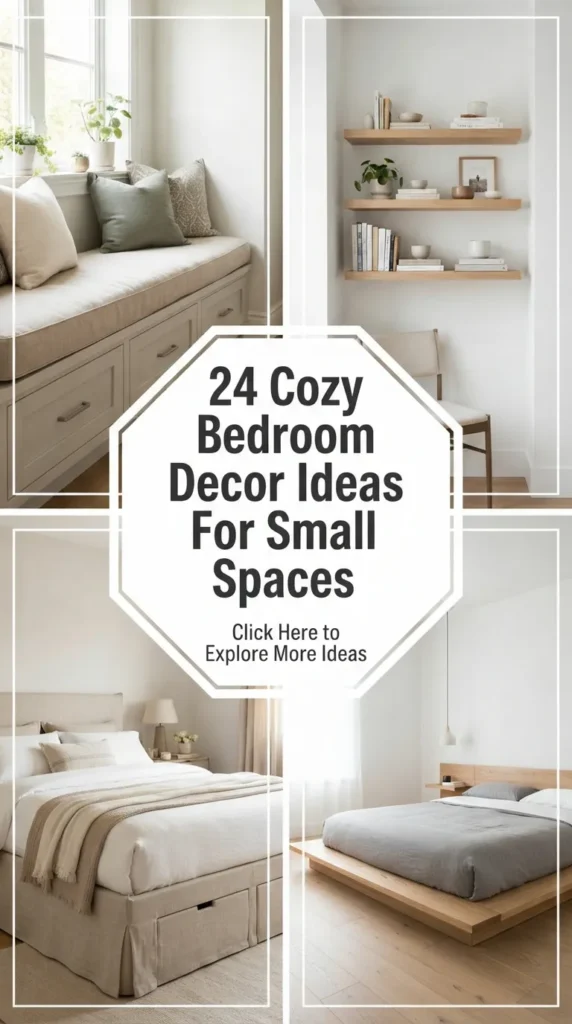
When square footage is tight, the space beneath your bed is prime storage territory. A tailored bed skirt conceals storage bins completely, keeping the visual presentation of the room clean and clutter-free.
How to Make It
- Utilize flat, rolling bins: Measure the height beneath your frame and buy low-profile wooden or fabric containers.
- Add a custom skirt: Place a tailored, split-corner linen bed skirt over the box spring or platform base.
- Organize by season: Store off-season clothing, extra bedding, or shoes inside labeled containers beneath.
Tips and Variations
- Tip: Choose rolling storage containers with dust-proof lids or zip covers to keep soft goods pristine.
- Variation: Invest in a hydraulic lift-up bed frame or a platform bed with built-in wooden drawers for an integrated look.
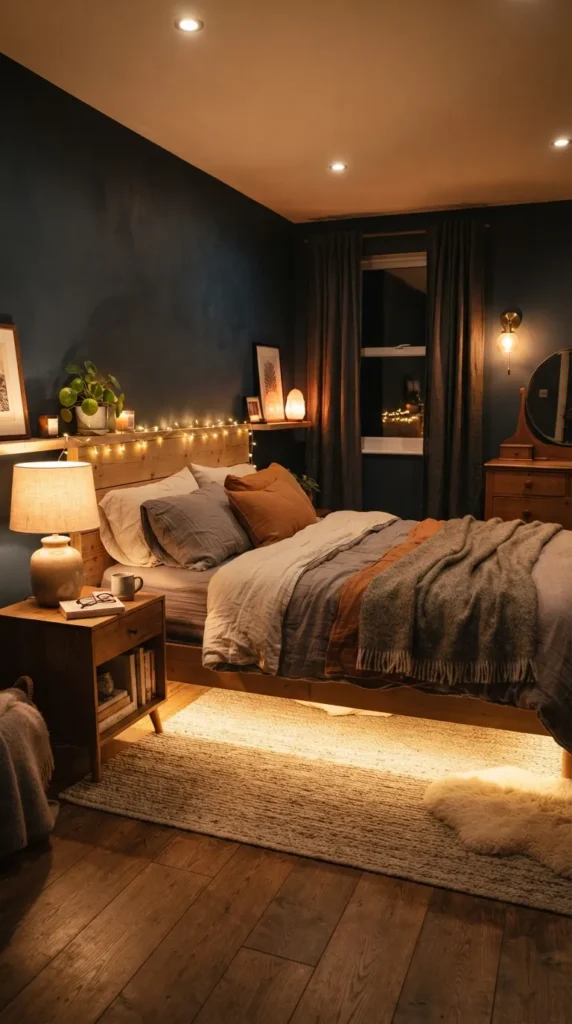
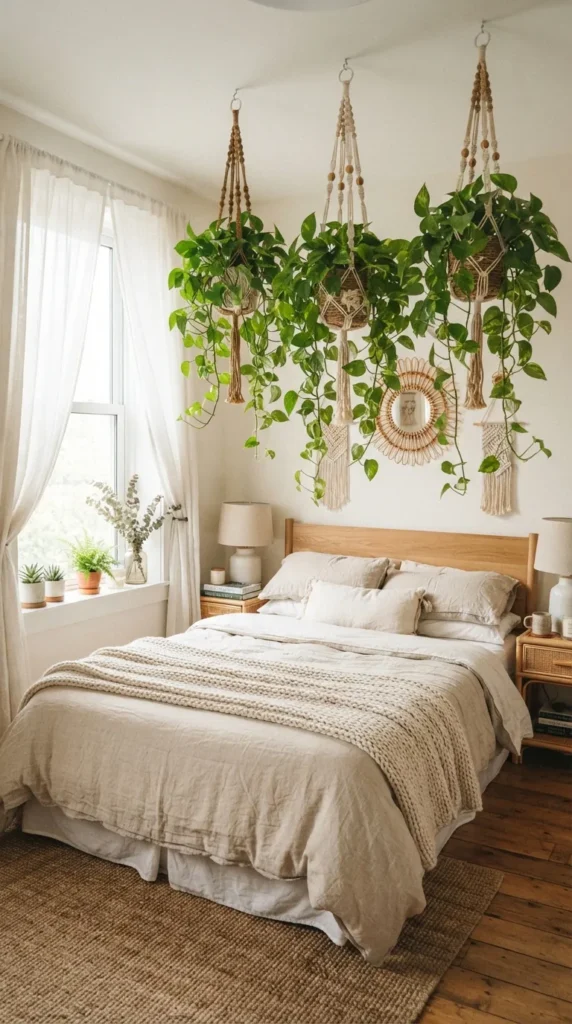
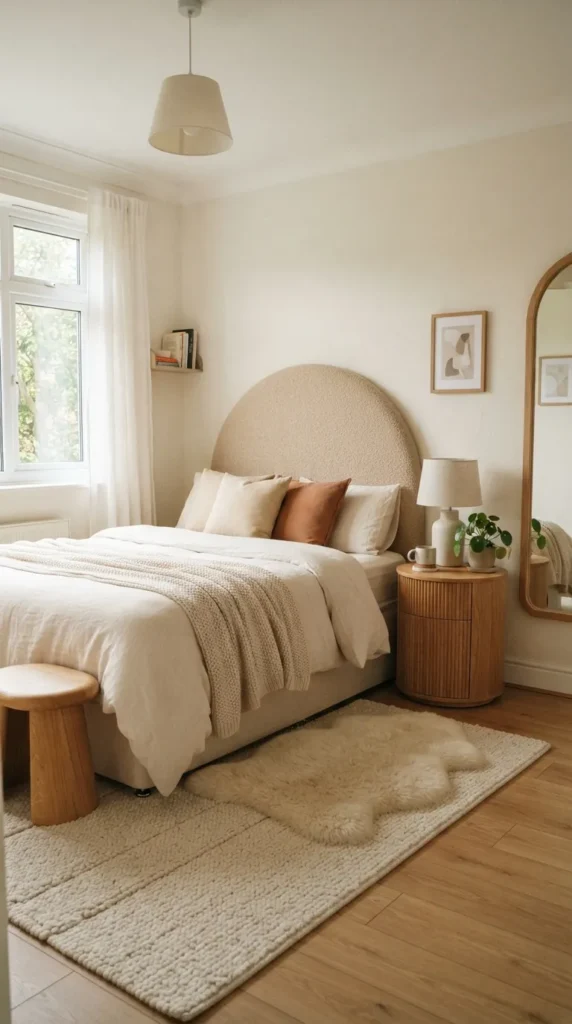
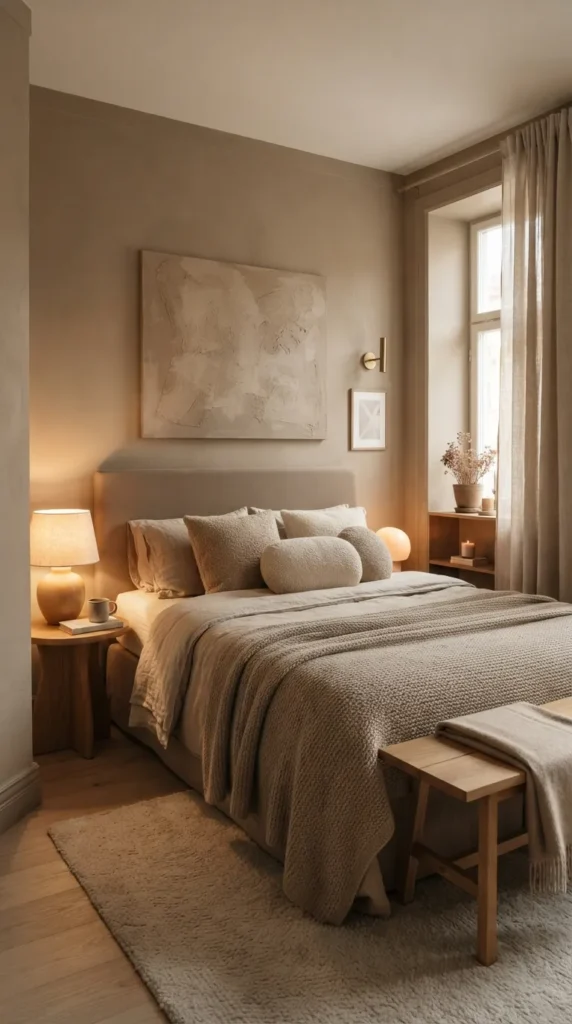
Idea 6: Monochromatic Earth-Toned Palette
What This Idea Means
Using multiple shades of a single color tone reduces visual boundaries. Earthy tones like warm terracotta, muted sage, or deep beige make corners melt away, wrapping the room in a soothing, cocooning feel.
How to Make It
- Pick your color anchor: Choose an inviting tone such as soft taupe or warm beige.
- Paint walls and trim: Paint the walls, baseboards, and window trims in the exact same color using a matte or eggshell finish.
- Match textiles: Layer bedding, rugs, and curtains in shades slightly lighter or darker than the wall paint.
Tips and Variations
- Tip: Introduce subtle variations in texture—such as raw silk, chunky knits, and brushed cotton—to keep monochromatic rooms dynamic.
- Variation: Apply this approach with soft muted greens or dusty blues if you prefer cool tones over warm neutrals.
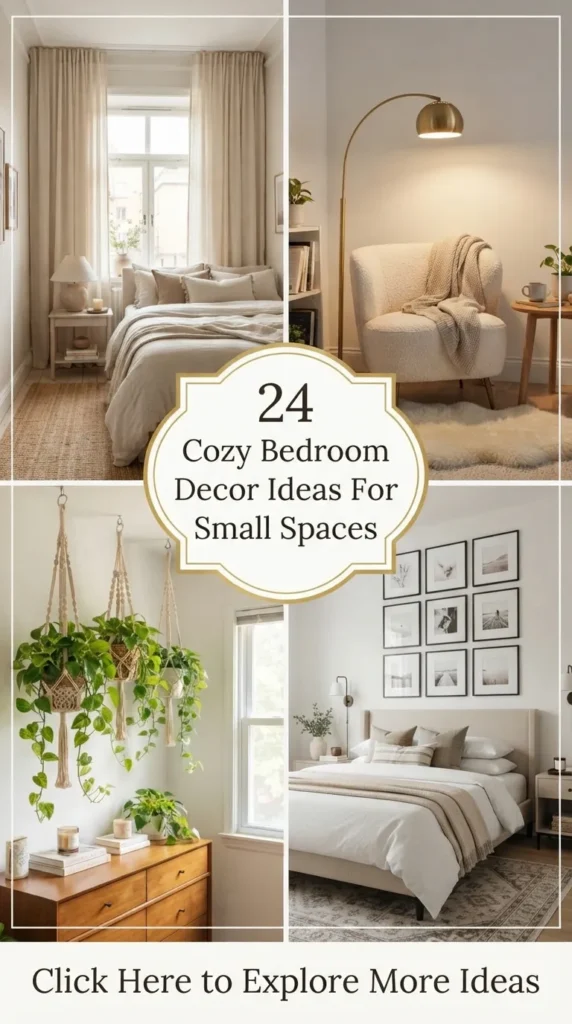
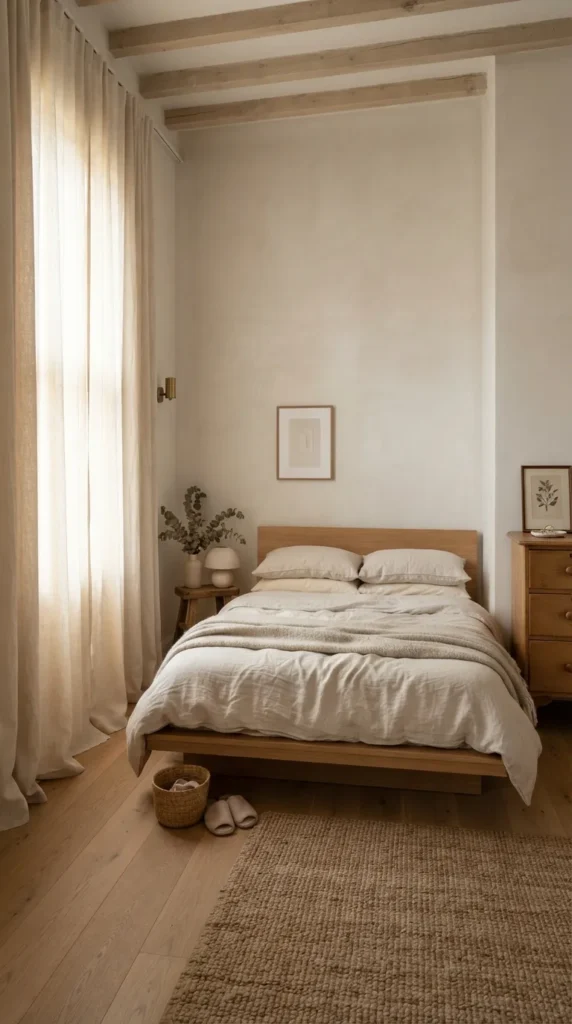
Idea 7: Ceiling-Height Floor-to-Ceiling Curtains
What This Idea Means
Hanging window drapes as close to the ceiling as possible trick the eye into perceiving higher ceilings, adding vertical length and a touch of grandeur to small floor plans.
How to Make It
- Mount hardware high: Screw your curtain rod directly below the ceiling crown molding or drywall line.
- Extend beyond the window: Ensure the rod extends 6 to 12 inches wider than the window frame on each side.
- Let drapes kiss the floor: Choose drapes long enough to lightly brush the floor surface.
Tips and Variations
- Tip: Combine blackout drapes with sheer under-panels to control light levels without sacrificing privacy.
- Variation: Use hidden ceiling tracks for a streamlined, modern look where the curtains look like they emerge straight from the ceiling.
Idea 8: The Corner Nook Bed Placement
What This Idea Means
While interior design tradition suggests centering the bed on a main wall, placing a bed against a corner frees up significant floor space in compact rooms, creating a private alcove.
How to Make It
- Position the frame: Tuck the headboard and one side of the bed flush against two intersecting walls.
- Softened contact points: Line both wall sides with extra throw pillows or a custom corner bolster pillow.
- Add wall art: Hang a small gallery wall or a single framed print directly above the corner angle to anchor the space.
Tips and Variations
- Tip: Use a slim, low-profile bed frame without a large footboard to keep navigation easy.
- Variation: Add a padded wall cushion along the length of the side wall so the bed doubles as a daytime daybed.
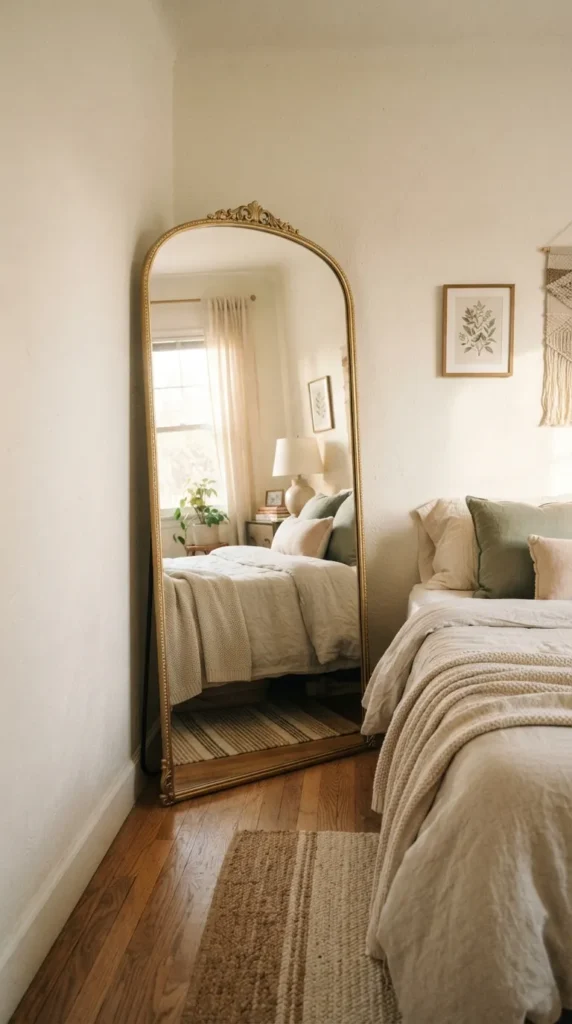
Idea 9: Oversized Statement Mirror Accent
What This Idea Means
Mirrors reflect light and visually double the depth of a room. An oversized full-length mirror resting against a wall acts like an extra window, bringing light into dim corners.
How to Make It
- Select a tall mirror: Choose a floor mirror that stands at least six feet tall with a thin metallic or wooden frame.
- Position intentionally: Lean it against a wall that catches ambient light from a nearby window, avoiding direct glare.
- Anchor for safety: Always secure leaning mirrors to wall studs using wall anchor straps.
Tips and Variations
- Tip: Place a warm floor lamp or a small potted plant near the base of the mirror to enhance its reflective perspective.
- Variation: If floor space won’t allow a standing mirror, hang a large circular mirror centered directly above the headboard.
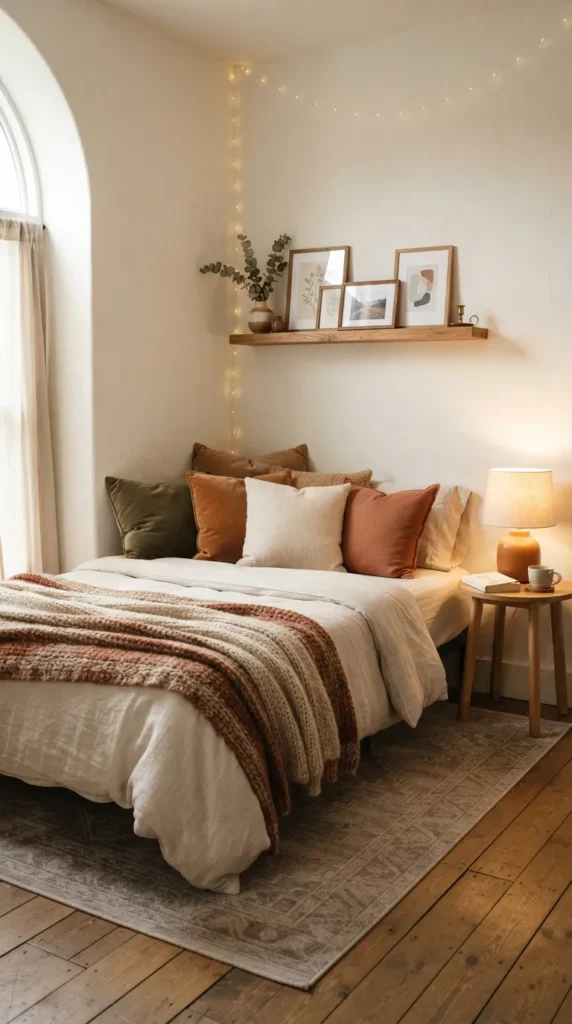
Idea 10: Integrated Headboard Storage Ledge
What This Idea Means
A narrow built-in or standalone headboard ledge replaces traditional bulky bedside tables while offering an inviting display space for art, small lamps, and essential personal items.
How to Make It
- Build or buy a shallow headboard: Create a slim box headboard (about 4 to 6 inches deep) that spans behind the bed.
- Cap with finished wood: Use a smooth piece of stained hardwood across the top surface.
- Decorate purposefully: Arrange framed photos, small ceramics, and framed prints along the ledge.
Tips and Variations
- Tip: Add built-in electrical outlets or USB ports to the sides of the headboard ledge to keep power cords hidden.
- Variation: Install a simple floating picture ledge floating slightly above a standard flat headboard for an easy, renter-friendly alternative.

Idea 11: Ambient Layered Lighting Scheme
What This Idea Means
Relying on a single bright overhead ceiling fixture can flatten a small space and create harsh shadows. Mixing soft light sources at varying heights creates depth, warmth, and a cozy mood.
How to Make It
- Incorporate three light levels: Combine low-level floor lighting, mid-level bedside illumination, and ambient overhead lights.
- Use warm temperature bulbs: Choose LED bulbs rated between 2700K and 3000K for a rich, warm glow.
- Install dimmers: Put as many fixtures as possible on dimmer switches or smart plugs.
Tips and Variations
- Tip: Place LED strip lights behind your headboard or under floating nightstands for a subtle, soothing backlight.
- Variation: Use paper lantern lamps or fabric-pendant lights to diffuse light evenly across small rooms.
Idea 12: Soft Curved Furniture and Elements
What This Idea Means
Rigid, boxy furniture can make a small room feel crowded and boxy. Introducing soft curves in nightstands, rugs, and decor smooths out traffic flow and creates a gentle, relaxing aesthetic.
How to Make It
- Select rounded silhouettes: Look for circular side tables, arched mirrors, or a channel-tufted arched headboard.
- Layer with organic shapes: Place a rounded or oval rug beneath the lower half of the bed.
- Incorporate rounded accessories: Choose ceramic vases, soft dome lamp shades, and rounded cushions.
Tips and Variations
- Tip: Curved furniture pieces improve foot traffic in tight spaces by eliminating sharp edges you might bump into.
- Variation: Paint a soft arched accent shape on the wall behind the bed or vanity to introduce gentle curves without buying new furniture.
Idea 13: Overhead Hanging Plant Canopy
What This Idea Means
Bringing plants into a small bedroom adds vibrant natural energy. Hanging greenery overhead frees up surfaces while drawing the eye upward into unused ceiling space.
How to Make It
- Install ceiling anchors: Screw secure ceiling hooks into studs or use appropriate heavy-duty toggle bolts near light sources.
- Select trailing plants: Choose easy-care indoor varieties like Pothos, Heartleaf Philodendron, or String of Hearts.
- Use natural woven pots: Hang plants using macramé holders, terracotta pots, or simple woven baskets.
Tips and Variations
- Tip: Trim trailing vines regularly to keep them looking lush and neat without blocking walkways or light.
- Variation: Place high-quality faux trailing plants on top of high wall shelves if natural light in the room is limited.
Idea 14: Pocket Doors or Sliding Barn Doors
What This Idea Means
Standard hinged interior doors require clear floor space to swing open, eating into valuable layout area. Sliding doors glide along the wall, maximizing interior square footage.
How to Make It
- Choose a sleek door slab: Pick a light-toned wood or painted panel that complements your bedroom palette.
- Mount sliding hardware: Secure an exposed steel or brass track system above the door opening.
- Install flush hardware: Use recessed pulls on the door face so it slides smoothly back and forth against the wall.
Tips and Variations
- Tip: Ensure the wall adjacent to the door opening remains free of thick picture frames or protruding switches.
- Variation: Use a frosted glass sliding door panel to maximize incoming light while maintaining privacy.
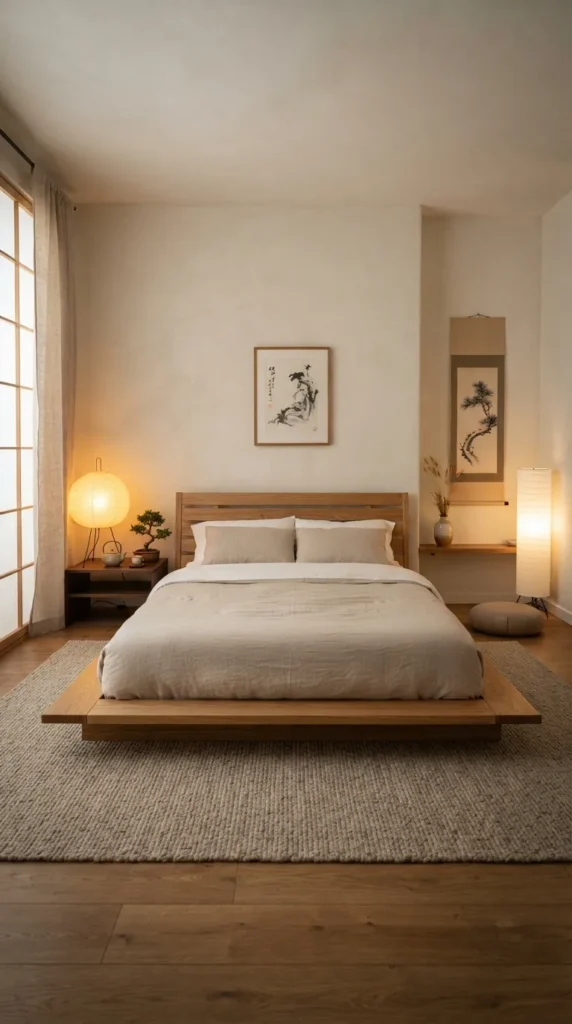
Idea 15: Low-Profile Japanese-Inspired Platform Bed
What This Idea Means
Keeping your furniture low to the ground creates an impression of increased vertical height. A minimalist platform bed keeps the center of the room open, expansive, and grounded.
How to Make It
- Select a low wooden frame: Choose a platform bed that sits no more than 6 to 10 inches off the floor.
- Pair with a comfortable mattress: Use a supportive mattress that sits flat inside or directly on top of the wooden slats.
- Keep surroundings simple: Keep surrounding decor minimal with small floor cushions, simple low side trays, and minimalist lighting.
Tips and Variations
- Tip: Tuck an oversized, low-pile neutral rug beneath the frame, extending outward on all sides to anchor the floor area.
- Variation: Build a DIY wide platform base using clean light oak or pine planks that extend slightly beyond the mattress edge.
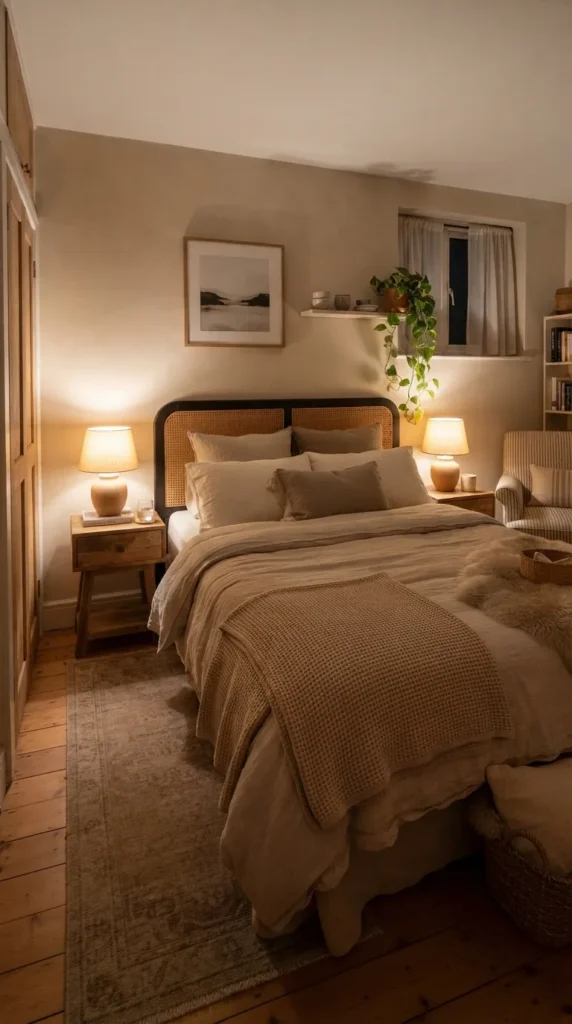
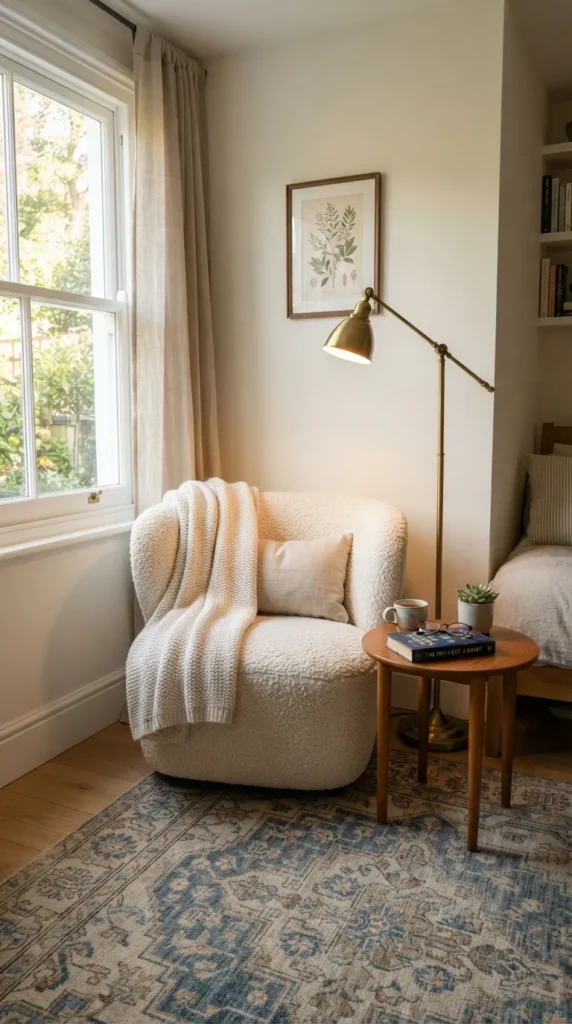
Idea 16: Cozy Reading Corner with a Slim Accent Chair
What This Idea Means
Even a compact bedroom can feel multi-functional. Tucking a slim accent chair into an unused corner creates a cozy secondary zone for reading, relaxing, or working.
How to Make It
- Choose a compact chair: Pick a small armless slipper chair, a mid-century accent seat, or a petite bouclé armless chair.
- Add tailored lighting: Mount a small adjustable reading lamp or wall-arm light directly beside the seating area.
- Include cozy textures: Drape a plush knit throw over the back of the chair and pair it with a small lumbar pillow.
Tips and Variations
- Tip: Ensure the chair stays scale-appropriate—avoid bulky, overstuffed recliners that overwhelm the corner.
- Variation: Replace the chair with a floor cushion and a small stack of books for a minimalist, floor-level seating nook.
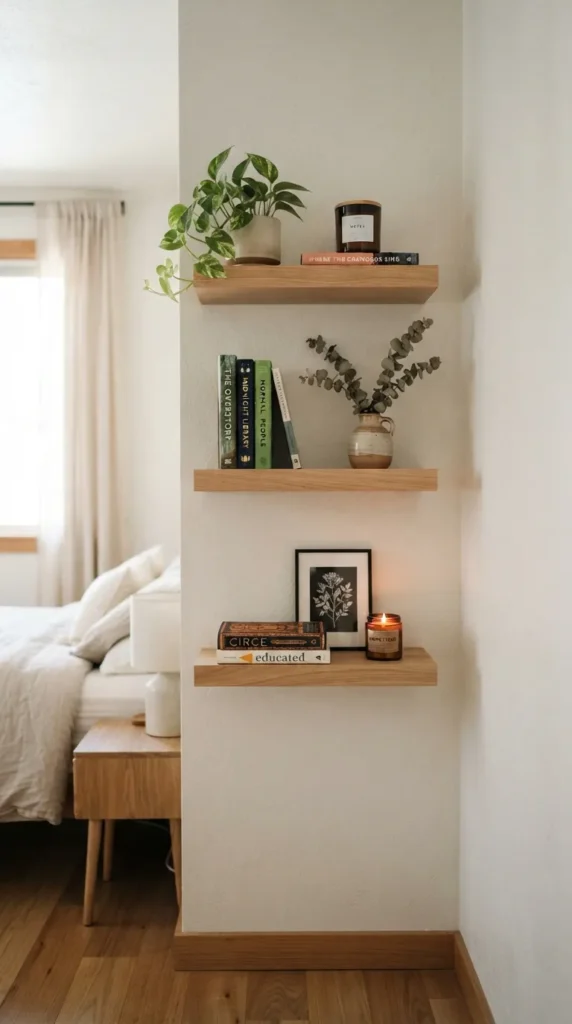
Idea 17: Vertical Floating Wall Shelves
What This Idea Means
When floor space is limited, look to your walls. Stacking floating shelves vertically turns unused wall height into functional display areas for books, art, and decor.
How to Make It
- Choose lightweight shelves: Select minimalist wood or metal floating shelves that match your wall tone or trim.
- Mount vertically: Install two to four shelves stacked vertically with 12 to 15 inches of space between them.
- Curate display items: Group items in thoughtful clusters—mixing books, small plants, framed photos, and candles.
Tips and Variations
- Tip: Keep the display balanced and uncluttered by leaving open negative space on each shelf layer.
- Variation: Install floating corner shelves to convert awkward interior angles into functional display space.
Idea 18: Soft Textured Bouclé and Fleece Accents
What This Idea Means
Plush, nubby fabrics like bouclé, sherpa, and fleece add soft tactile warmth. These textures bring physical comfort to a room while maintaining a neutral, serene palette.
How to Make It
- Introduce textural seating or bedding: Add a bouclé bench at the foot of the bed or line the bed with soft fleece pillows.
- Mix with smooth textiles: Pair rich textured fabrics with crisp cotton, smooth linen, or matte wood surfaces.
- Stick to serene tones: Choose soft whites, creams, ochres, or gentle grays to preserve an easy, uncluttered feel.
Tips and Variations
- Tip: Use bouclé and heavy fleece primarily on accent pieces like pillows, throws, or ottomans to avoid visual clutter.
- Variation: Choose a fully upholstered bouclé headboard in a pale cream shade to serve as a soft, comfortable focal point.
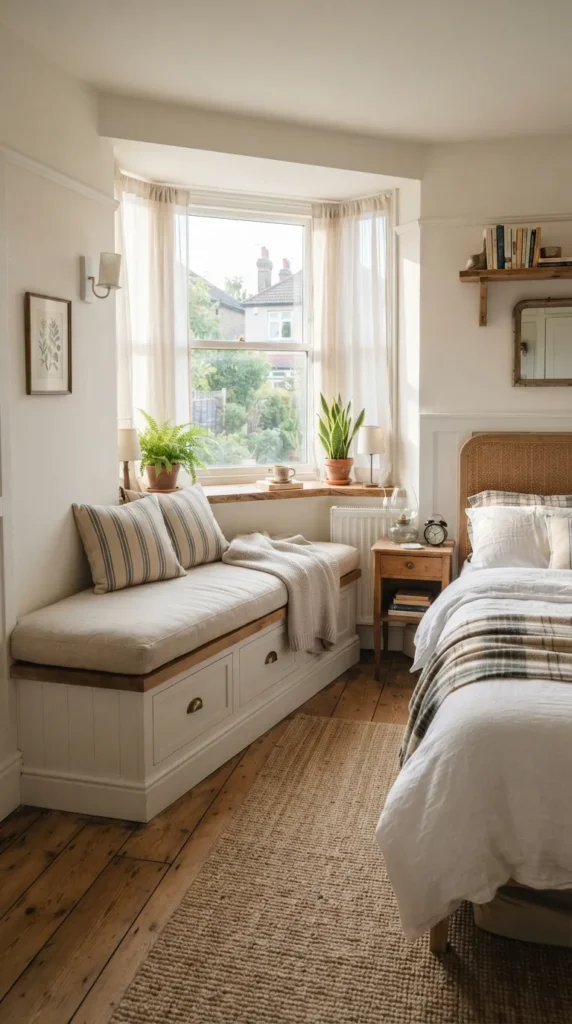
Idea 19: Built-In Bench with Integrated Storage
What This Idea Means
Maximizing space under windows or along footboards with built-in storage benches provides comfortable seating while concealing clutter out of sight.
How to Make It
- Source or construct a bench: Use a low cabinet unit or build a simple wooden box bench with a hinged top.
- Add custom seating: Cap the bench top with a thick foam cushion wrapped in durable linen, canvas, or velvet.
- Organize interior space: Use internal divider bins to keep shoes, extra blankets, or winter gear neatly organized inside.
Tips and Variations
- Tip: Place the bench directly beneath a window to create an inviting, sunlit window seat reading nook.
- Variation: Use an open-base bench lined with woven storage baskets underneath for easy access.
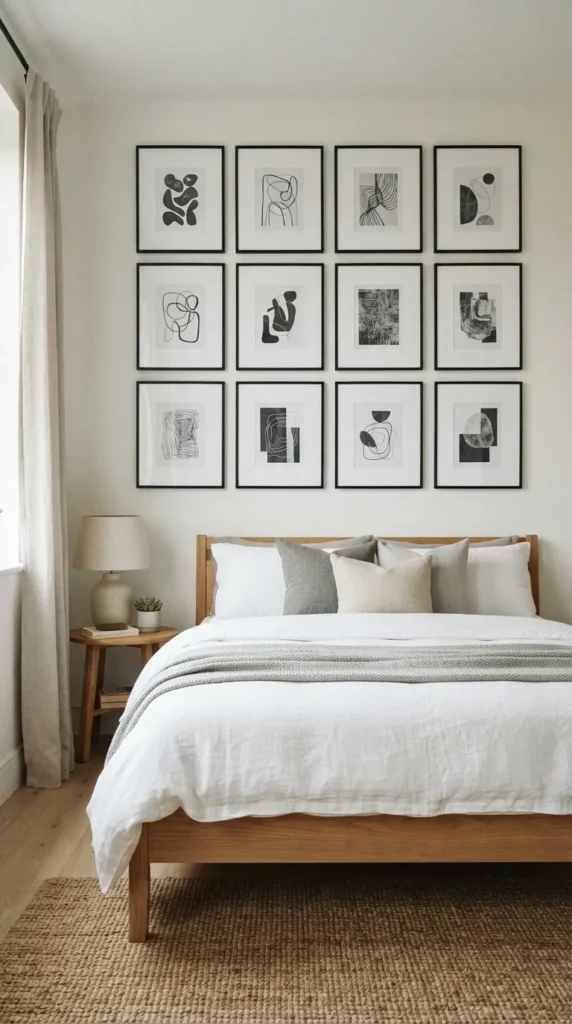
Idea 20: Minimalist Gallery Wall with Cohesive Frames
What This Idea Means
A well-curated gallery wall adds personal character without overwhelming a small space. Using matching frames and cohesive art keeps the look balanced and intentional.
How to Make It
- Select cohesive artwork: Pick black-and-white photos, minimal line art prints, or soft nature photography.
- Unify with frames: Choose matching thin frames with generous white mats to surround each piece of art.
- Layout with care: Arrange the frames in a clean grid or a balanced symmetrical layout above the bed or dresser.
Tips and Variations
- Tip: Keep 2 to 3 inches of consistent space between every frame to maintain a neat, harmonious look.
- Variation: Display two large matching framed prints side-by-side for a clean, minimalist alternative to a multi-frame gallery.